At ISPO this year, wool was everywhere: base layers, fleeces, knitted jackets and padded outerwear. Merino led the way. Here's what makes merino different from other wools, why it suits sportswear, and what to think about if you're adding it to your range.
Not all wool is the same
Wool is graded by the thickness of each fibre, measured in microns (µm). A micron is a thousandth of a millimetre. The finer the fibre, the softer the wool feels against the skin. Coarser fibres are what make some wool jumpers feel scratchy.
This display at ISPO showed the grades clearly:
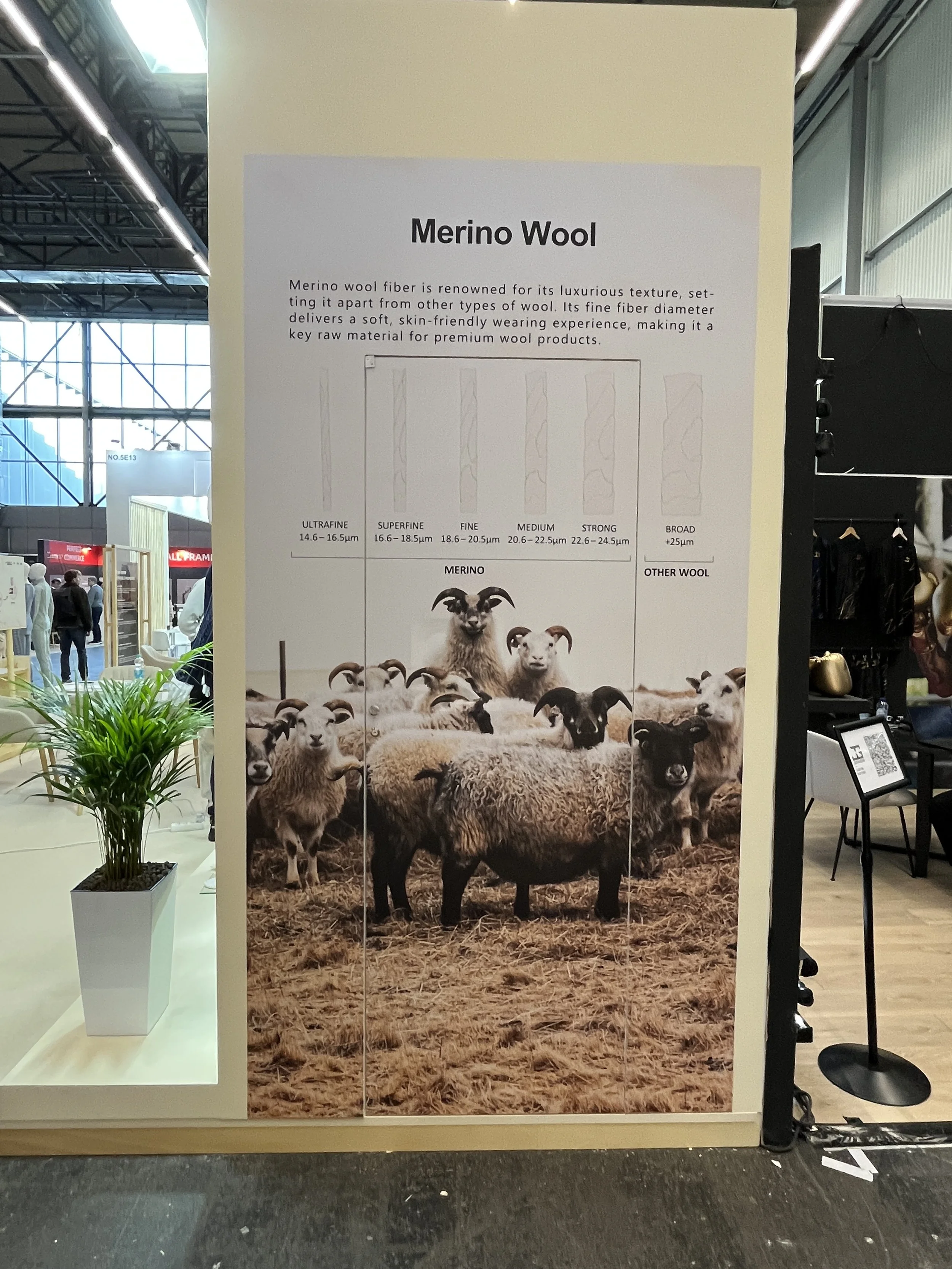
Merino grades on display at ISPO, from ultrafine to strong, with broader "other wool" on the right.
Ultrafine merino 14.6–16.5 µm Medium merino 20.6–22.5 µm
Superfine merino 16.6–18.5 µm Strong merino 22.6–24.5 µm
Fine merino 18.6–20.5 µm Broad (other wool) 25 µm and above
Figures from the display at ISPO.
Merino comes from the merino sheep, a breed known for its fine fleece. Wool from many other sheep breeds is broader, which makes it hard-wearing and great for chunky knitwear or outerwear, but less comfortable next to the skin. Other luxury fibres such as cashmere and mohair come from goats, not sheep.
For next-to-skin sportswear, such as base layers and tees, finer merino is the usual choice. One T-shirt I saw carried a label reading "Merino 16MC", which I read as 16-micron merino: ultrafine.
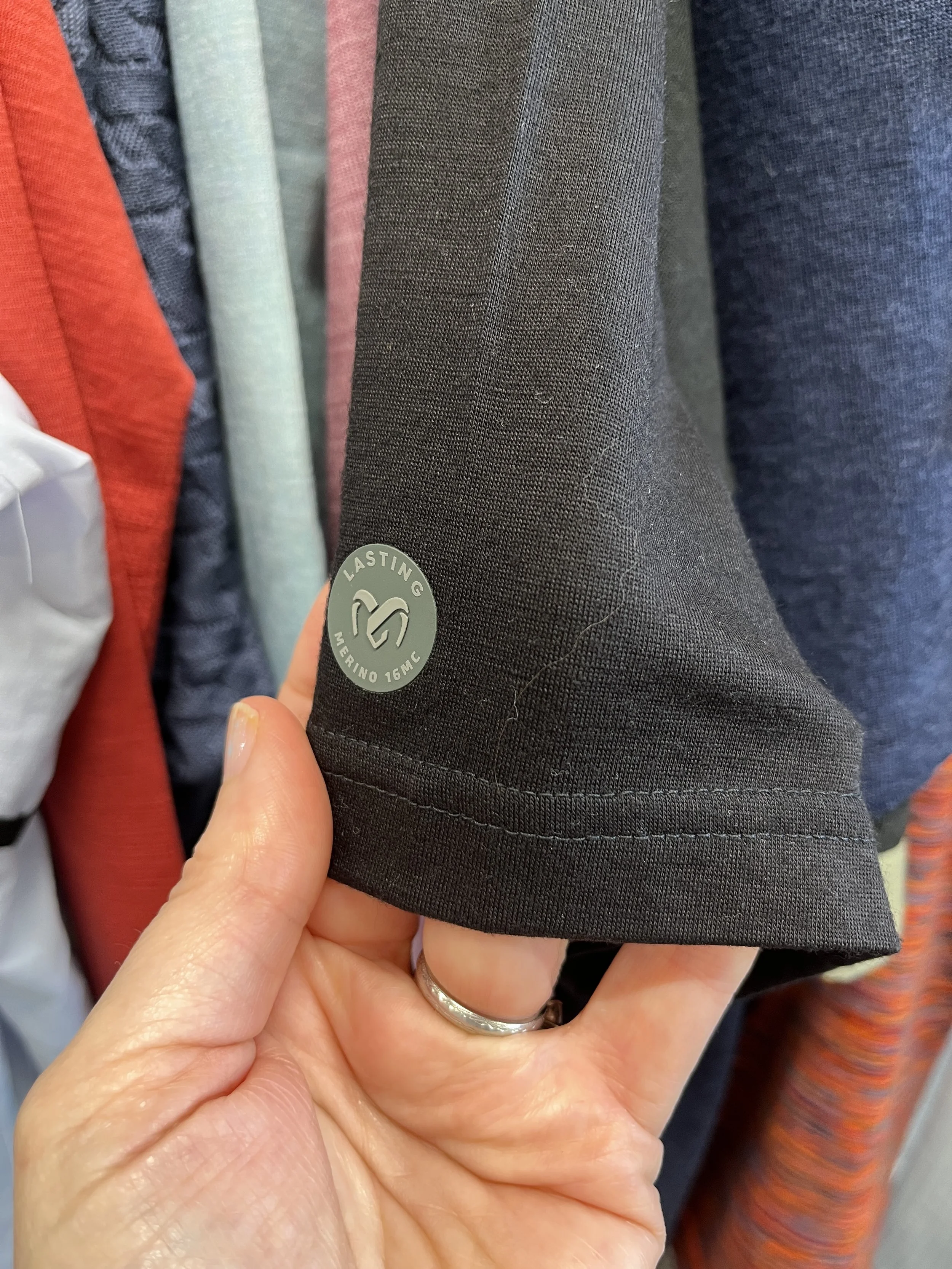
"Lasting Merino 16MC" label on a merino tee.
Why merino suits sportswear
Soft next to skin. Fine fibres mean no itch, even in base layers.
Comfortable across temperatures. Merino works as a single layer on mild days and as a base layer in the cold.
Manages moisture. It moves heat and moisture away from the body, which helps on long sessions.
Stays fresher. Merino resists odour better than most synthetics, so it can often be worn more than once between washes (Sports Organics).
A natural fibre. Pure, untreated wool is renewable and can biodegrade, though blends and some finishes change that.
What to watch out for
Cost. Fine merino costs more than synthetics.
Durability. Very fine, lightweight merino can be delicate, and it can pill where straps or arms rub. Blending with polyamide or polyester adds strength, but then is you are adding synthetics into your garment.
Drying time. It dries reasonably quickly, but not as fast as polyester.
Care. Customers need to wash it gently and keep it away from moths.
Animal welfare. Ask mills about sourcing, including whether wool is mulesing-free. Certifications such as the Responsible Wool Standard (RWS) cover animal welfare and land management.
Wool beyond the base layer
The Suedwolle stand at ISPO showed how far wool has moved beyond base layers.
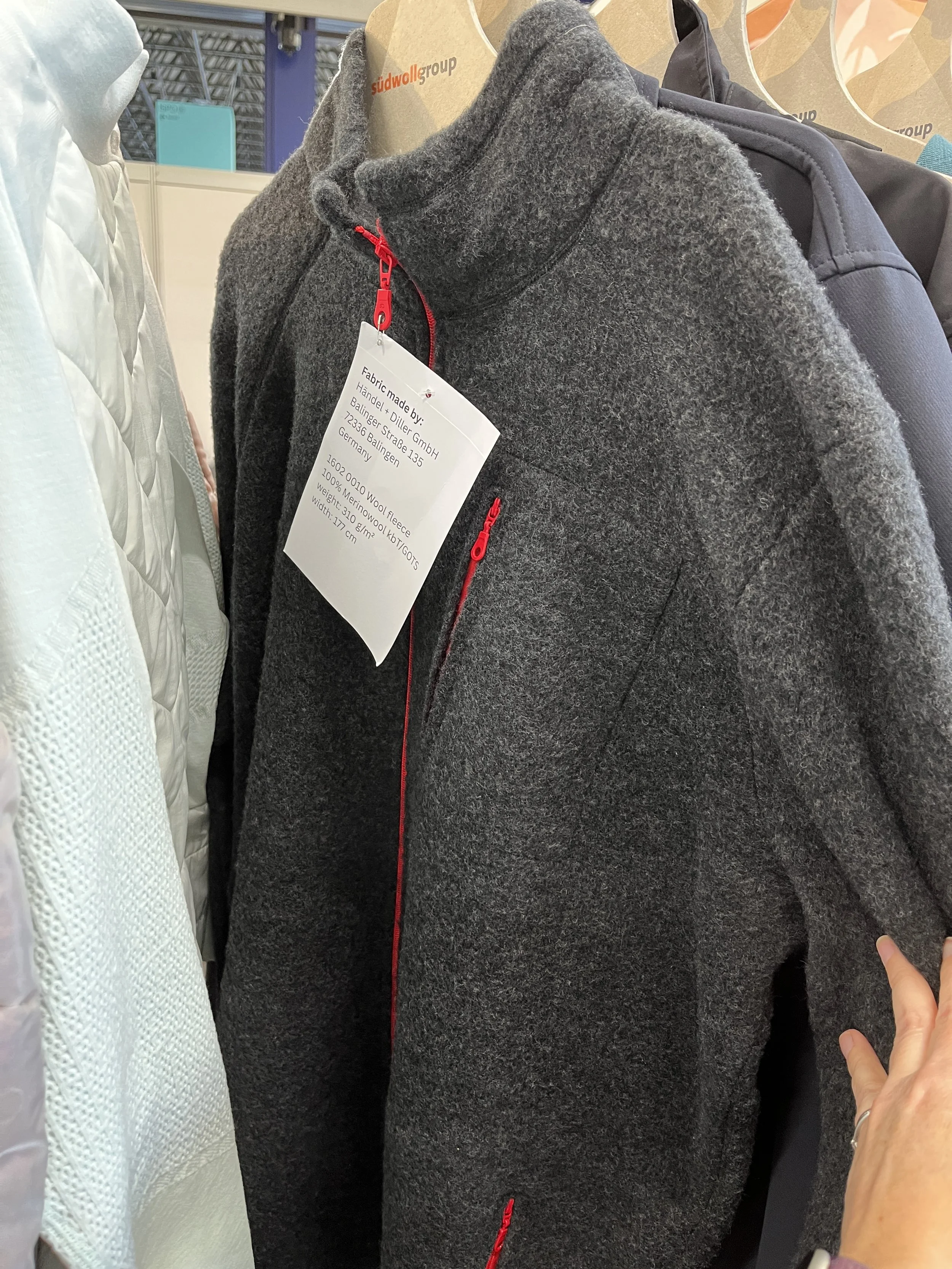
A 100% merino wool fleece: soft, warm and naturally breathable. Fabric by Händel + Diller, 310 g/m².
A 100% merino wool fleece: soft, warm and naturally breathable. Fabric by Händel + Diller, 310 g/m².
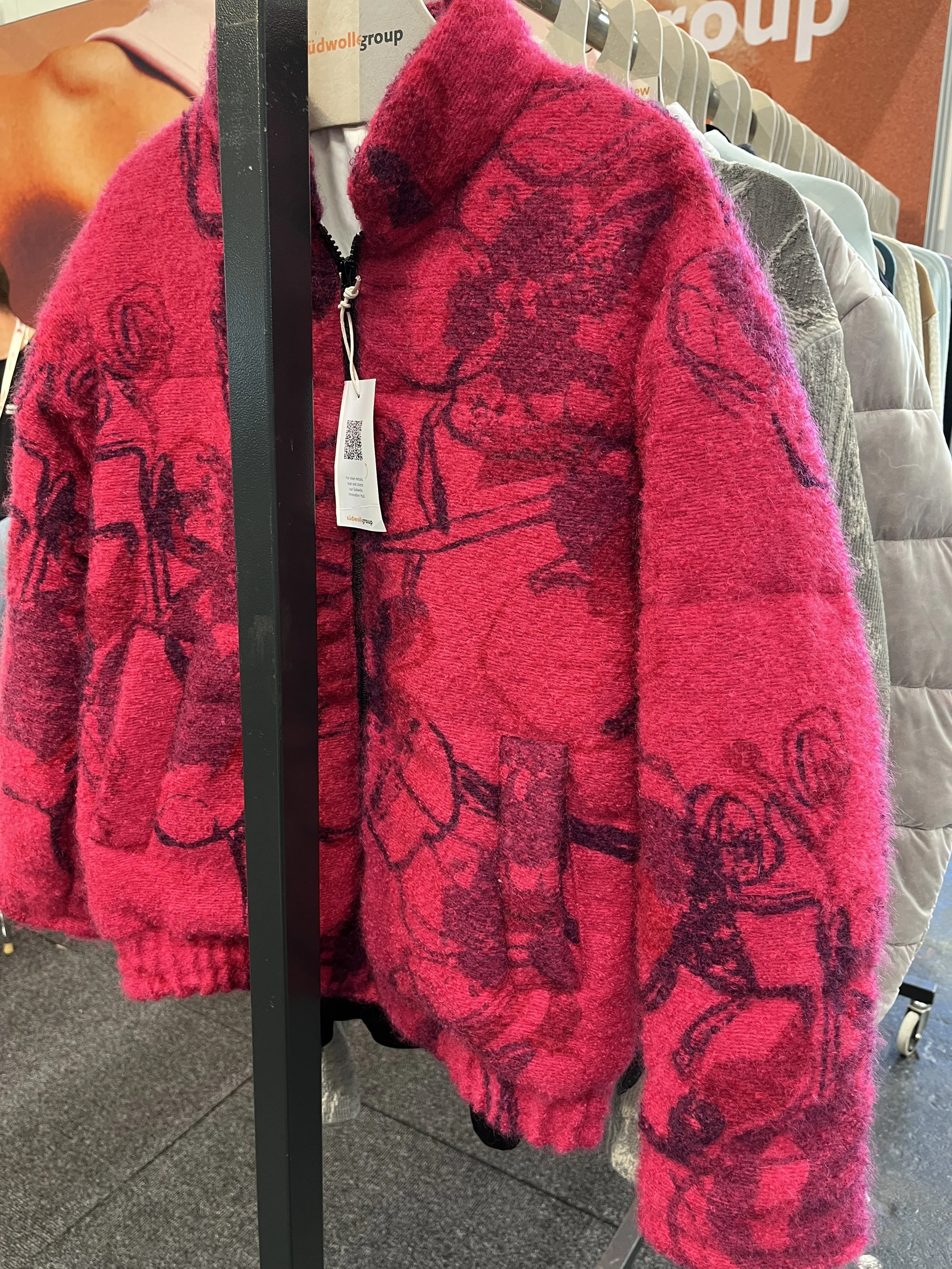
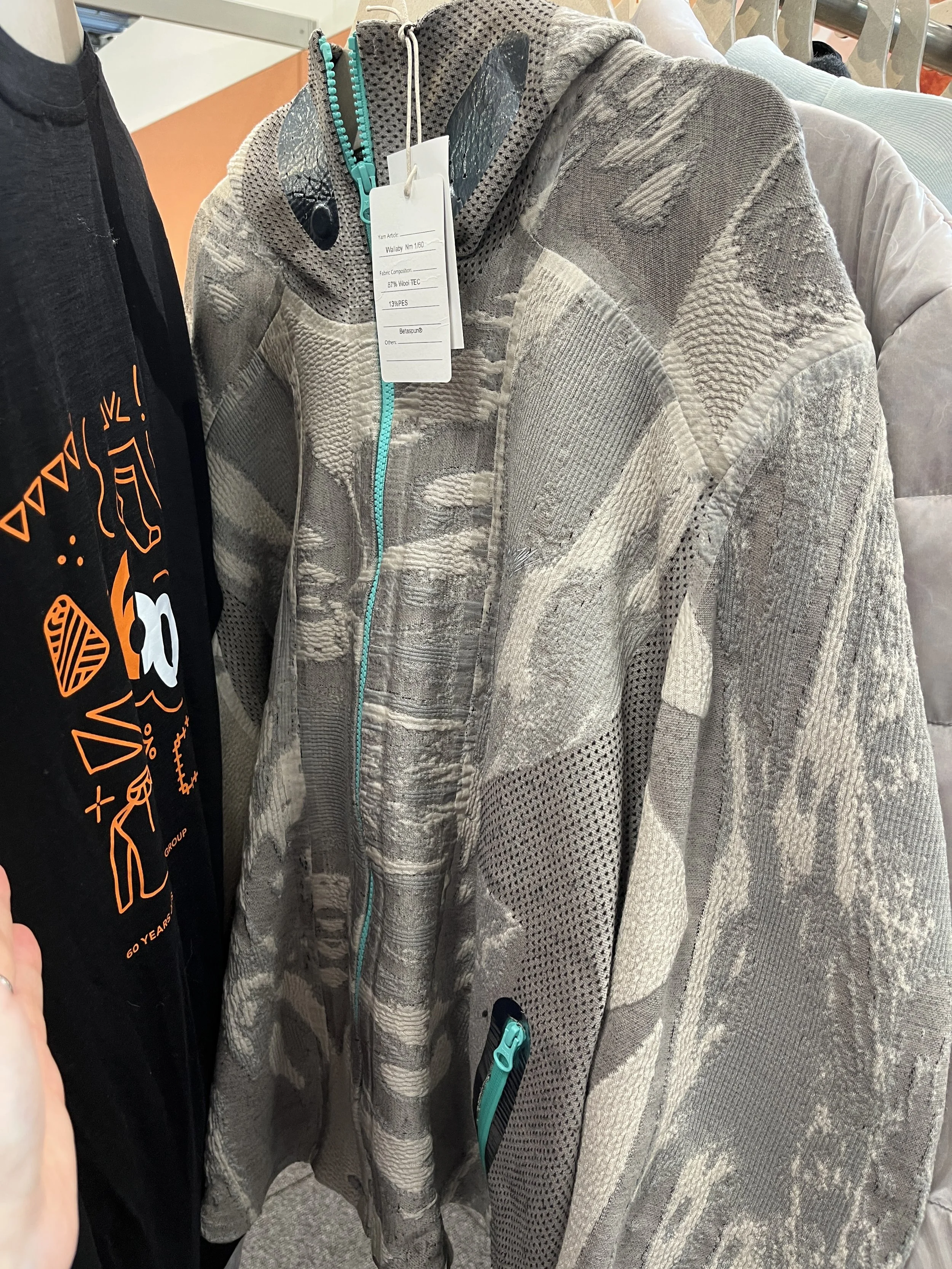
A bold pink wool jacket with a brushed, hairy surface, showing wool's fashion side.
Blends like these combine wool's comfort with the strength, stretch or quick drying of synthetics, so wool can now work in everything from technical jackets to lifestyle pieces.
Caring for merino
Good care keeps merino performing for longer.
Air it between wears. Hanging it somewhere airy is often enough to freshen it up.
Wash cool and gently, on a cold or wool cycle or by hand, with a mild wool detergent. Do not bleach and or use fabric softener.
Turn it inside out to wash and keep it away from zips and Velcro to avoid snags.
Dry it flat or on a hanger, away from radiators. Avoid the tumble dryer, which can shrink and felt the wool.
Store it clean and dry, folded rather than hung, in a drawer or sealed bag to keep moths away. I hear horse chesnuts (conkers) can deter moths but I have no actual evidence.
Remove pilling with a fabric comb or de-piller.
If you're designing with merino, put these instructions on your care labels and product pages. Customers who look after it get more from it.
Thinking about merino for your range?
Merino suits base layers, running tees, outdoor and lifestyle pieces, but fibre grade, fabric weight and blend all change how a garment performs. I can help you choose the right merino fabric and develop styles that make the most of it.
